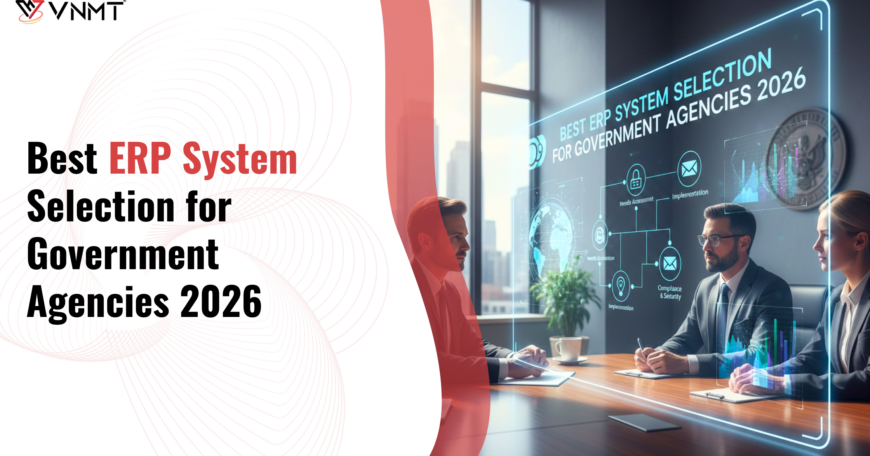

The growing need for modernization, greater transparency, and citizen-centric service delivery has become a key focus for public sector organizations worldwide. In this phase of digital governance, the enterprise system has become more of a strategic choice than just a technology choice. This is exactly why government agencies select the best ERP.
Government departments often face real-world challenges such as budget overruns, audit delays, and citizen dissatisfaction due to slow or inefficient processes. A well-implemented ERP acts as a policy enabler by supporting compliance, streamlining workflows, improving financial accountability, and helping agencies deliver better services to citizens.
Within this guidebook, we will discuss how government agencies can evaluate, select, and implement the best ERP solution for the government sector while keeping scalability, compliance, and operational efficiency in mind.
Why ERP Systems Are More Important Than Ever for Government Agencies
However, before examining the selection criteria, it is important to understand why ERP adoption has become so urgent for public institutions.
Typically, a government organization has complex business processes, multiple departments to manage, strict compliance requirements, and limited budgets. Relying on outdated systems can result in data silos, excessive manual intervention, and limited reporting capabilities. An ERP helps address these challenges by providing a centralized platform for managing data and automating processes.
With a modern ERP, agencies can achieve tangible outcomes such as faster procurement cycles, improved audit readiness, and better visibility into fund utilization. These systems enhance budget control, streamline procurement, support citizen service delivery, and generate accurate reports to enable data-driven decision-making across departments.
Essential Features and Requirements of ERP Systems for Government Agencies
Each ERP evaluation project must begin with an understanding of its respective business needs.
Market Regulations And Competition
Challenge: Government agencies must comply with a complex web of local, national, and international laws related to financial reporting, data protection, and auditing. Failing to meet these regulations can result in legal penalties, reputational damage, and operational disruptions.
ERP Capability: Modern ERP systems provide built-in compliance features, such as secure data handling, role-based access controls, automated audit trails, and reporting aligned with government accounting standards.
Outcome: Agencies can maintain full compliance, reduce regulatory risks, and produce accurate reports that satisfy auditors and stakeholders efficiently.
Multi-Department Operations Handling
Challenge: Unlike private enterprises, government organizations manage multiple departments, grants, programs, and funding sources simultaneously. Traditional systems often fail to consolidate these operations, leading to inefficiencies and reporting errors.
ERP Capability: Government ERP platforms integrate all departments and funding streams into a centralized system, offering multi-entity accounting, inter-departmental workflow management, and grant tracking.
Outcome: Agencies achieve a unified view of operations, reduce process duplication, and gain precise control over funds, ensuring optimal resource allocation.
Transparency and Accountability
Challenge: Citizens and oversight bodies demand real-time visibility into government activities, spending, and decision-making. Manual processes and fragmented systems make it difficult to ensure accountability.
ERP Capability: ERP solutions offer dashboards, real-time reporting, and traceability features that capture all activities and approvals. Automated alerts and workflow tracking enhance visibility at every step.
Outcome: Agencies can demonstrate accountability, build public trust, and make informed decisions based on accurate, timely data.
How to Select an ERP Solution for Government Agencies: A Step-by-Step Process
Choosing the right ERP is actually much more of a structured journey than a one-off decision.
Step 1: Establishing Strategic Goals
Government agencies should start by defining and documenting their strategic goals for adopting an ERP system. These goals can include improving the transparency of financial information, automating workflows to reduce manual effort, enabling cloud-based access for staff, or enhancing citizen service delivery. Clear objectives align stakeholders, provide a roadmap for selection, and offer measurable benchmarks to assess the success of the ERP after implementation.
Step 2: Analyze current systems and gaps
Agencies should conduct an internal review of their current systems to identify inefficiencies, redundant tools, and integration challenges. This assessment helps highlight areas where manual processes, data silos, or outdated technology slow down operations. Understanding these gaps ensures that the selected ERP addresses actual operational pain points and supports smoother, more efficient processes across departments.
Step 3: Determine the Required ERP Functionalities
Government agencies need to identify the critical functionalities required in the ERP system. Key capabilities often include budgetary control to manage public funds, procurement management to streamline purchasing, grant and program tracking, HR administration, and automated reporting for audits and decision-making. Ensuring these functionalities are available helps agencies improve efficiency, maintain compliance, and make informed decisions based on real-time data.
Step 4: Assess Deployment Models
Evaluating the deployment model is an important step in selecting an ERP system. Cloud ERP for government has become increasingly popular because it offers scalability, lower upfront costs, automatic updates, and secure remote access. Agencies should consider whether a cloud, on-premise, or hybrid solution fits their IT strategy, operational needs, and long-term growth plans while supporting ongoing digital transformation initiatives.
Step 5: Vendor & Partner Evaluation
Choosing the right ERP vendor and implementation partner is critical to the success of the project. Agencies should evaluate potential partners based on their experience with public sector projects, ability to customize and integrate the ERP with existing systems, and the availability of support and training services. A skilled partner ensures that the ERP system is configured properly, adopted efficiently by staff, and delivers the operational and policy outcomes expected by the agency.
Cloud ERP as the Future for Government Agencies in 2026
As digital transformation accelerates, cloud ERP deployment is becoming the preferred choice for public sector agencies. Governments face unique challenges such as managing multiple departments, strict compliance requirements, budget constraints, and the need for transparent reporting. Cloud ERP offers several advantages over traditional on-premise systems, including lower infrastructure costs, faster deployment, automatic updates, and easier scalability. On-premise ERP can provide more control over data storage but often comes with higher maintenance costs, slower upgrades, and limited flexibility. For most government agencies seeking efficiency, security, and scalability, cloud ERP has become the preferred choice in 2026.
The Rise of Cloud-based ERPs Among Governments
Cloud-based ERP systems help government agencies reduce infrastructure costs by eliminating the need for extensive on-premise hardware. They provide automatic upgrades, secure backups, and disaster recovery planning, which ensures business continuity in critical government operations. Additionally, cloud platforms enable secure remote access, allowing employees across departments and locations to access the same data in real time, which improves collaboration, decision-making, and responsiveness to citizens’ needs.
Security and Data Sovereignty Concerns
Government agencies handle sensitive financial and citizen data that must be protected while remaining compliant with local and international regulations. Modern cloud ERP solutions follow strict security standards and certifications, offering encryption, role-based access controls, and data residency options. This ensures that governments can control where data is stored and who can access it without compromising operational flexibility or compliance requirements.
The Importance of Workflow Automation in Ensuring Government Projects’ Success
Beyond core ERP modules, automation is a critical factor that drives efficiency and effectiveness in government projects. By automating repetitive processes, governments can reduce errors, save time, and focus resources on strategic activities.
Streamlining Government Workflow Automation
ERP systems automate approvals, administrative tasks, and documentation workflows, which significantly reduces the time and effort required for operations such as procurement, payments, and grant management. This allows agencies to complete processes faster and with higher accuracy.
Improved Citizen Service Delivery
With backend operations automated, government employees can dedicate more time to interacting with citizens and addressing their needs rather than performing manual data entry. This leads to faster service delivery, higher citizen satisfaction, and improved public trust in government services.
Why Governments Choose NetSuite
NetSuite is increasingly considered a leading ERP solution for the public sector globally. Its cloud-based design, combined with modules for financial management, procurement, HR, and reporting, provides a unified solution that supports complex government operations.
Capabilities and Features
NetSuite government ERP offers real-time financial management, budgeting, procurement, and reporting within a single cloud platform. Its modular structure allows agencies to start with core functions and expand as operational needs grow, ensuring scalability without disrupting existing processes.
Financial Transparency and Compliance
NetSuite supports multi-fund accounting, audit trails, and compliance-ready reporting, which are essential for managing public sector finances. The platform helps agencies maintain transparency, improve financial control, and comply with local, national, and international regulations.
NetSuite CRM with Citizen and Stakeholder Connectivity
NetSuite CRM enables government agencies to manage interactions with citizens, vendors, and partners more effectively. It helps track inquiries, manage service requests, and monitor stakeholder engagement, improving responsiveness and strengthening trust between the government and the public.
NetSuite Expert Implementation in Government Projects and Its Importance
Selecting an ERP system is only the beginning; how it is implemented determines the overall success of the project. For government agencies, the ERP must be scalable, adaptable, and capable of supporting future growth, policy changes, and evolving digital initiatives without requiring a complete replacement.
ERP implementation in public sector projects often faces challenges such as resistance to change, complex approval processes, and data migration issues. A systematic approach helps minimize disruptions and ensures smooth adoption.
Why NetSuite Implementation Expertise Matters
Engaging a professional NetSuite implementation partner ensures the ERP is configured correctly from the start, taking into account the specific workflows and compliance needs of government agencies.
- Agencies should evaluate ERP solutions based on clearly defined criteria, ensuring the system aligns with operational goals and digital transformation plans.
- The ERP should be able to scale and adapt to future developments, policy changes, and ongoing digital initiatives.
- Government ERP systems must seamlessly integrate with existing applications, legacy databases, and third-party solutions to maintain smooth operations and avoid disruption.
Continuing Ahead with Confidence in Your ERP Journey
Making an appropriate ERP choice is always an investment that defines how government departments will function and deliver to their citizens in future years. With an effective ERP selection process, cloud readiness, and implementation, it is possible for government departments to realize value from their digital transformation projects.
Reach out to VNMT Solutions to learn how expertise in NetSuite implementation and consultation can help with your digital transformation as a government institution.
Follow VNMT Solutions on LinkedIn for information on ERP trends and public sector technology. For NetSuite tutorials, demonstrations, and implementation advice, can subscribe to the YouTube Channel.