
Yatala remains committed to cementing its position as one of the most active industrial zones in South Queensland. While manufacturing plants, logistics hubs, warehouses, and service-based companies continue to grow on a yearly basis, so does the need for these businesses to operate on an increasingly connected and efficient business system.
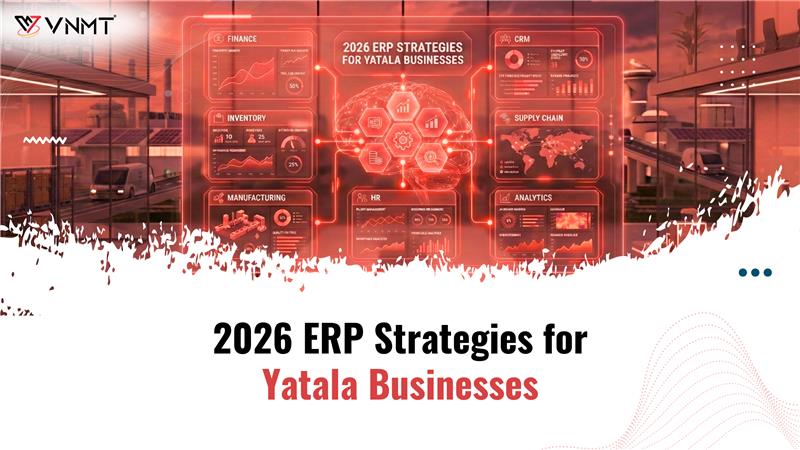
Yatala continues to grow as a key industrial zone in South Queensland, with strong activity in manufacturing, logistics, warehousing, and distribution. As these industries expand, the need for connected and efficient operations increases. This is why ERP systems and smart ERP Implementation Strategies are becoming essential for 2026. A modern ERP platform helps manufacturing units improve production accuracy, logistics companies enhance delivery timelines, and distribution businesses track inventory in real time.
Here is a detailed guide to the top ERP implementation strategies to be followed by businesses in Yatala-
Key Considerations for Yatala Businesses in 2026
These strategies provide a practical roadmap to help Yatala businesses implement ERP systems smoothly, reduce risk, and unlock long-term operational efficiency.
1. Plan an ERP Implementation Strategy Before Commencement
A perfect ERP implementation plan sets the tone for the entire project. It helps your team stay focused, understand their roles, and move together toward the same goals and timelines. Your plan should include:
- Business challenges you want the ERP to solve
- Department-wise requirements
- Key workflows such as finance, supply chain, and customer service
- Expected budget and timeline
- Risk management steps
- Resource allocation
A well-articulated plan enables Yatala businesses to move with clarity and confidence into the future.
2. Create A Project Team With Strong Ownership
ERP implementation is more than a technical exercise; it is an organization-wide effort that requires cooperation. This can help analyze and understand the business deeply. Your internal team should include:
- A project sponsor from the leadership
- Departmental heads
- A project manager
- Process owners
- Technical personnel, where available
It provides a link between your organization and your ERP partner. This is where the process of implementation of ERP becomes easier and more reliable when the team takes full ownership.
3. Work With a NetSuite Implementation Company in Yatala
Local experience matters. A local partner who understands the South Queensland business climate will be in a better position to advise on compliance, taxation, and industry-specific workflows. A reliable NetSuite ERP Partner in South Queensland can facilitate:
- Requirement analysis
- System configuration
- Data migration
- Customisation
- Integration
- Testing
- Training and support
With the right partner, the roadmap for implementation of ERP becomes one that is easier to follow-and thus more in tune with long-term goals.
4. Choose the Right ERP Deployment Strategy
Every deployment method does not fit all businesses. The approach needs to be chosen according to the size, operations, and readiness for change for each respective business entity in Yatala.
Big Bang Approach
All modules launch on a single date. It produces fast results, yet requires good preparation. This approach delivers immediate benefits but carries higher risk if issues arise during the rollout.
Phased Approach
The Phased Approach launches ERP modules sequentially, one after the other. Many Yatala companies go with this approach to minimize disruption and help employees adapt at a manageable pace.
Pilot or Parallel Approach
This helps them test and identify issues before rolling out the system organization-wide, reducing risk and facilitating smoother transitions.
Hybrid Approach
It combines both phased and pilot approaches to allow for flexibility. The appropriate ERP deployment strategy reduces risks and makes the process smoother.
5. Prepare and Clean Your Data Before Migration
Data migration is considered a crucial step in the entire ERP implementation process. Poor quality data leads to errors, inefficiency, and mistrust in the new system. Data preparation covers the following:
- Removing Duplicate Entries
- Standardizing customer, product, and vendor information
- Clean old records
- Creating consistent naming structures
- Ownership assignment for data sets
Data cleaning enhances system performance, the accuracy of reports, and the user experience at go-live.
6. Document Your Business Processes
Clearly documenting processes eliminates misunderstandings, and in this way, the ERP system will support your actual workflow without imposing new habits. Document all critical processes for procurement, order fulfillment, production, warehousing, payroll, and financial closing. This will be very useful for your ERP team when implementing the system correctly.
It also helps your ERP partner to identify inefficiencies, suggest ways to improve, and automate steps.
7. Invest in Strong User Training
User adoption is very crucial to the success of ERP. Even the most powerful ERP system fails when employees do not understand how to use it effectively. A training plan should include:
- Hands-on role-based training
- User manuals
- FAQ sessions
- Real-time scenarios
- Post Go Live Support
Proper training guarantees fewer errors, greater confidence, and smooth operations upon deployment.
8. Highlight Change Management
ERP implementation brings change to workflows, roles, and daily routines. If not managed well, this change may meet resistance from employees. Effective changes in management involves some key points that make the process efficient and easy:
- Communicate well and early.
- Evolved Discussion with staff.
- Providing support during training.
- Addressing concerns openly.
- Encouraging feedback.
With a feeling of being involved, employees will adapt and eventually come to trust the new ERP system.
9. Test the System First
Testing is a significant stage in your ERP implementation roadmap, which gives you scope to find the gaps that can affect the performance once it has been launched. Some of the important tests include:
- Functional testing
- User Acceptance Testing
- Load and performance testing
- Testing of the end-to-end process
Thorough testing minimizes risks and ensures stability during go-live.
10. Focus on Post-Go-Live Improvement
The implementation of ERP does not end with going live. The initial few months are really crucial to stabilize the system. Continuous improvement may include:
- Automation rule changes
- Refining Dashboards
- Improving reporting formats, Improving Integrations, and reviewing user feedback
This helps the system keep aligned with business growth in the long run.

Grow Your Business Faster Than Previous
ERP solutions are becoming an indispensable part of Yatala enterprises looking to drive efficiency, accuracy, and scalability. Amidst the growing competition across South Queensland, the right ERP Implementation Strategies will lead companies to the next level of digital transformation.
To scale-up better, Yatala businesses should consider seeking help from a local expert. VNMT Solutions , a NetSuite Implementation Company in Yatala and a reliable NetSuite ERP Partner in South Queensland, leverages strong knowledge of the industry, seamless implementation capabilities, and ongoing support for its customers.