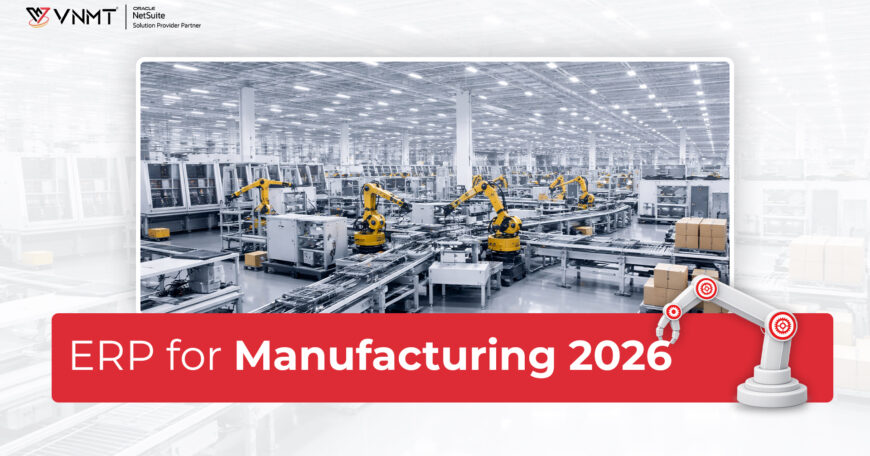

Manufacturing operations are entering a critical new era where speed, control, and predictive decision-making are key to success. The factories of 2026 will not be isolated production units, but fully integrated ecosystems where data drives planning, procurement, quality, and financial management. Manufacturers today struggle with disconnected shop floor data, inaccurate demand planning, and delayed financial visibility, challenges that legacy systems can no longer handle in 2026.
The implementation of ERP in manufacturing operations in 2026 is imperative for competitiveness and optimal use of this integrated ecosystem. The new ERP system is no longer a back-office record-keeping system but an operational command center that integrates people, machines, materials, and business strategy.
The Evolving Nature of Manufacturing Operations
The environment in which manufacturing occurs has evolved from a traditional linear manufacturing process to a highly interconnected network. The presence of multi-location manufacturing facilities, global supplier dependencies, product customization, and shorter product life cycles requires a level of coordination that cannot be achieved in traditional systems.
ERP provides a managed approach to dealing with these complexities by integrating demand, supply, production capacity, and financials into one system. This level of integration allows manufacturers to work with precision rather than guesswork, as without ERP, manufacturers often face stock imbalances and delayed production decisions.
Manufacturing ERP Trends 2026: Factors that Influence Strategic Planning
The manufacturing sector and advancements in technology are revolutionizing the implementation of ERP. Knowledge of manufacturing ERP trends 2026 will help organizations prepare for the future to ensure the sustainability of their operations.
The Connected Factory Environment
ERP systems connect directly with machines and shop floor tools, so production data moves automatically into planning and management systems. Managers can see output levels, delays, and work status in real time instead of waiting for manual updates.
Why it matters: Real-time visibility helps teams act quickly when production issues arise.
Predictive Operational Intelligence
Modern ERP platforms use data analysis to detect warning signs such as unusual machine behavior, material delays, or process slowdowns. This allows teams to address risks before they affect output or delivery schedules.
Why it matters: Early detection reduces unexpected stoppages and operational losses.
Dynamic Production Planning
Production schedules are no longer fixed. ERP helps adjust plans instantly when demand changes, materials are delayed, or capacity shifts. All related areas, like inventory and procurement, stay aligned with the updated plan.
Why it matters: Flexible planning keeps production stable even during sudden changes.
Digital Supply Chain Collaboration
ERP creates a shared space where suppliers and purchasing teams exchange forecasts, order updates, and shipment details. This improves coordination and reduces confusion caused by emails or disconnected tools.
Why it matters: Better coordination leads to more reliable material supply and fewer delays.
Sustainability and Resource Management
ERP systems help track how much material, energy, and resources are being used during production. Companies can measure waste levels and identify areas where efficiency can improve.
Why it matters: Efficient resource use lowers costs and supports environmental responsibility.
Benefits of ERP in Manufacturing Operations
The ERP system provides several advantages to manufacturing companies as it enhances visibility, coordination, and control of the overall manufacturing process.
- Operational Efficiency
Real-time visibility across production, inventory, and procurement enables faster coordination between departments. Integrated data improves demand forecasting and production planning, helping operations align closely with market needs. Synchronizing purchasing, inventory, and production schedules minimizes excess stock and reduces the risk of material shortages. Improved scheduling accuracy and early alerts about potential disruptions also strengthen on-time delivery performance.
- Financial Control
Accurate tracking of material usage, labor input, and overhead expenses provides a clear view of true production costs. This supports stronger margin management, better pricing decisions, and more reliable profitability analysis. Financial data connected directly with operations allows leadership to monitor performance without waiting for delayed reports.
- Compliance and Visibility
Detailed tracking of materials, batches, and production history supports regulatory compliance and full product traceability. Centralized dashboards and performance metrics give decision makers immediate access to operational and financial insights, enabling quicker and more informed strategic decisions.
ERP Best Practices for Manufacturing Operations 2026
In order to achieve long-term success with ERP, it is necessary for manufacturers to implement best practices that ensure consistency, data accuracy, and continuous system optimization.
- Manufacturers should standardize business processes across departments and facilities before ERP implementation to ensure consistency, improve efficiency, and simplify system configuration. Aligning workflows early helps avoid excessive customization, reduces integration issues, and prevents reporting inconsistencies after the system goes live.
- It is necessary for organizations to ensure high data accuracy through effective governance, as accurate ERP results require clean and updated data.
- Operational teams should utilize real-time ERP dashboards on a daily basis to make informed decisions regarding production, inventory, and procurement, as opposed to reports on a periodic basis.
- Continuous training sessions should be organized to ensure that employees are well aware of system capabilities and can effectively utilize advanced system capabilities.
- ERP planning should be aligned with long-term business goals such as business expansion, product diversification, or process automation.
- Organizations should identify and implement ERP systems that are scalable to meet future digital initiatives and business growth.
Also Read: Guide on NetSuite Outsourced Manufacturing

Power Smarter Manufacturing Operations with Modern ERP
ERP drives resilience and efficiency in modern manufacturing. Using ERP as a decision support tool, not just a record-keeping platform, strengthens operational control and increases flexibility in a changing market. Selecting the right ERP partner and a well-planned implementation strategy is essential to realizing these benefits effectively.
Stay ahead in ERP, digital transformation, and manufacturing optimization. Follow VNMT Solutions on LinkedIn today. If you’re considering ERP for your 2026 manufacturing operations, take action now and explore valuable insights and practical guidance on the VNMT Solutions YouTube channel.