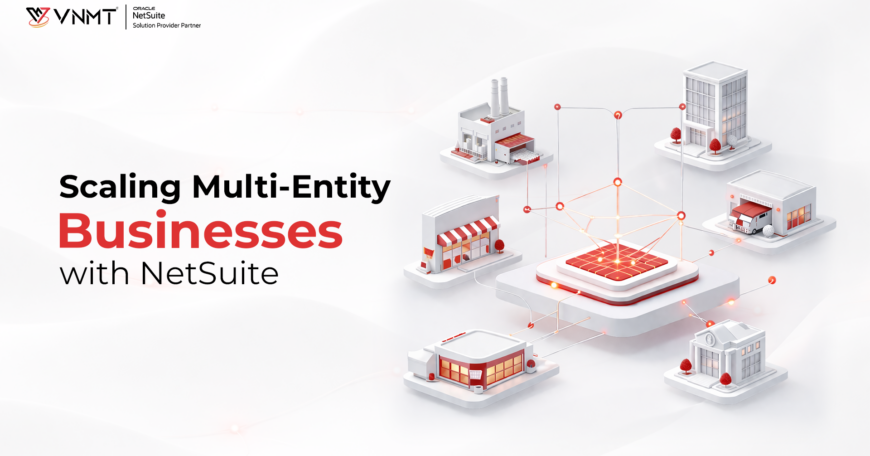

Expanding into new subsidiaries, regions, or business units is a strong indicator of business growth. However, with that growth comes added operational complexity. Finance teams often find themselves managing multiple ledgers, leadership faces challenges in bringing together data from different entities, and reconciliation processes can delay timely decision-making.
This is where NetSuite becomes essential for multi-entity organizations. Built to support complex business structures, it enables better control, unified visibility, and smoother coordination across all entities, making growth more manageable and efficient.
Why Multi-Entity Organizations Struggle Without a Unified ERP
However, before we move into the solution, let’s understand the reason behind the chaos in the structure of the entities. The challenge is not the number of entities but the lack of standardized processes and a single, reliable source of information. Without consistency and centralized data, operations become fragmented and difficult to manage.
Disconnected tools add to the problem by creating inconsistent reporting and making consolidation more complex. A modern multi-subsidiary ERP system addresses this by bringing all entities onto a single platform, enabling structured management while still allowing each unit the flexibility to operate independently.
How NetSuite Builds a Unified Operating Model Across Entities
In order for an organization to effectively handle complexity, there is a need for central management as well as autonomy at the entity level. This is exactly what NetSuite offers.
Centralized Financial Control
Each entity has its own financial records, currency, and its own set of rules and regulations, all while being part of the same system. This offers the central management the ability to exercise centralized financial management without impacting the autonomy of the entities.
Real Time Data Visibility
Since all the entities operate under the same database, the data is always live. This offers the central management the ability to access data in an instant.
Scalable Entity Onboarding
When the need arises for the addition of more entities, they can be added without the need for any changes to the systems or processes.
This makes NetSuite ideal for fast-growing as well as acquisition-minded organizations.
Why Intercompany Accounting Is One of the Biggest Challenges for Growing Businesses?
Managing the intercompany accounting process becomes a complex task with the growth of the business and the number of entities involved. The challenges faced in the process are:
High Effort and Time Consumption
The process of intercompany accounting is the most labor-intensive part of managing the financial process of a company. The process becomes tedious when it involves a number of entities.
Increased Risk of Errors
The process of intercompany accounting is prone to errors when it is managed manually with the help of spreadsheets.
Difficulty in Consolidation
Combining the financial data from a number of entities is a major challenge faced by the finance department of a company.
How Real-Time Reporting Enhances Leadership Decisions?
In today’s fast-paced business environment, having real-time insights is essential for leaders to make informed and timely decisions.
1. Faster Access to Insights
Executives can get instant access to updated data at any given time. This allows them to take immediate action in response to any changes in the market or business operations. Quick access to credible data ensures that business decisions are proactive rather than reactive.
2. Unified Performance View
Financial data, profitability trends, and risks are all accessible in a single system. There is no need for fragmented reporting for all business entities. Executives get a complete view of the business and can make decisions accordingly.
3. Strategic Decision-Making
Real-time dashboards make reporting a forward-looking process for executives. They can identify trends and predict business outcomes effectively. This allows them to use financial data as a strategy for business growth.
4. Confident and Aligned Leadership
Executives can rely on credible data for decision-making. The entire team is aligned and understands the business decisions taken accordingly.
How NetSuite Simplifies Multi-Entity Management Across Borders
Global growth brings operational variables that are difficult for many systems to handle. NetSuite helps organizations maintain consistency across regions and adapt to local requirements.
- Automates currency conversion and ensures accurate management of finances in different regions.
- Manages local tax regulations and legal compliance in a seamless manner.
- Provides both local entity reporting and consolidated global reporting.
- Ensures governance of all entities while allowing independent operations.
How Effective Multi-Entity Implementation Supports Scalable Growth
Even the most powerful ERP system requires a well-planned and executed implementation. An experienced NetSuite partner will help make sure that the system is properly integrated with business processes and business entities, and reporting requirements. Key Areas Where a Partner Adds Value-
- Design of system architecture as per organizational structure.
- Configuring workflow and automation.
- Handling data migration and integration.
This partnership will help make sure that NetSuite becomes a growth enabler and not just another technology project.
How NetSuite Delivers Strategic and Operational Value
In addition to the operational improvements, NetSuite also has a positive impact on the overall operating model of an enterprise. For instance, the enterprise is able to experience fast closes, as well as more accurate reporting, along with improved visibility into the drivers of performance.
Together, these improvements enable enterprise management to plan effectively, make informed investments, and mitigate risks with greater confidence.
Also Read About: NetSuite Intercompany Transactions

Turn Multi-Entity Complexity into a Scalable Growth Engine
Scaling a business should create growth, not complexity. With the right ERP system, companies can streamline processes, automate intercompany transactions, and base decisions on real-time insights. NetSuite provides multi-entity organizations with the framework to manage complexity effectively and turn it into a strategic advantage.
For more practical guidance on building a scalable ERP platform, follow VNMT Solutions on LinkedIn to access expert insights on implementing NetSuite successfully.