
As small businesses in India grow, spreadsheets, manual processes, and disconnected software systems often become barriers to operational efficiency and scalability. Finance teams may work on one software platform, inventory is managed through another, and procurement still depends on emails and approval chains. Over time, this lack of centralized visibility creates reporting inaccuracies, forecasting challenges, inventory confusion, and operational delays.
This is exactly why businesses are increasingly exploring Industry-Specific NetSuite Solutions. Modern companies no longer need only accounting software. They require ERP systems that automate workflows, improve operational transparency, reduce manual dependency, and support long-term growth. However, successful ERP implementation depends not only on the software itself but also on choosing the right NetSuite Solution Provider that understands the operational challenges and workflow requirements of specific industries.
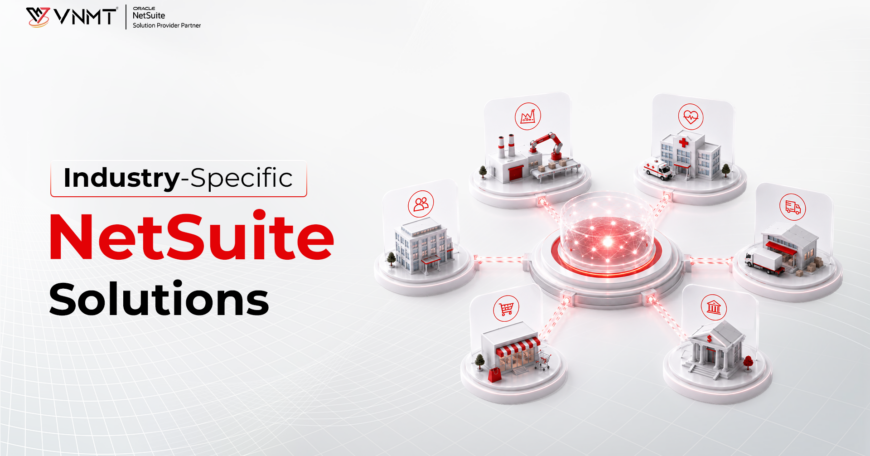
Businesses across manufacturing, wholesale distribution, retail, and service sectors operate with completely different workflows, reporting structures, and operational priorities. A generic ERP setup often creates inefficiencies because every industry has unique requirements related to inventory management, procurement, production, customer operations, and automation. Industry-Specific NetSuite Solutions help businesses align ERP capabilities with real operational needs, improving visibility, efficiency, decision-making, and long-term scalability.
Why Industry-Specific ERP Matters
ERP implementations often fail because businesses approach them with a generic mindset and focus too heavily on software functionality without evaluating whether the system aligns with actual operational workflows.
The operational priorities of a manufacturing business are completely different from those of a retail company or logistics provider. Manufacturers focus on procurement planning, production scheduling, and quality control. Retail companies prioritize inventory synchronization and customer experience. Logistics businesses depend on shipment visibility and warehouse coordination.
When ERP systems are implemented without considering these industry differences, employees often start depending on spreadsheets and manual workarounds outside the ERP system. Over time, this reduces adoption rates and creates operational inefficiencies. Industry-specific ERP implementation helps solve this issue by aligning workflows with actual business operations. This has become increasingly important for Indian businesses that are expanding across multiple cities, warehouses, and digital channels.
Read More: Reasons Cloud ERP Implementations Fail and the Best Ways to Fix Them
Organizations today must manage-
1. Multi-location inventory across warehouses and operational facilities, where visibility becomes difficult without centralized systems
2. GST compliance and taxation processes that require synchronized financial reporting
3. Supplier management and procurement workflows become more complex when businesses rely on multiple vendors across operational stages
4. Rapid expansion across online channels, regional markets, and operational units that increase reporting complexity
Another common issue is the lack of coordination between departments, where sales teams have limited visibility into real-time inventory levels, finance teams struggle to access timely operational reports, and procurement teams often make decisions reactively rather than through strategic planning.
This challenge can be addressed through ERP systems designed specifically for industry operations and centralized data management.
The advantages include:
1. Better decision-making because management teams gain real-time visibility into operations, inventory movement, procurement activities, and financial performance
2. Improved forecasting by connecting sales trends, inventory usage, and procurement cycles within one centralized system
3. Stronger operational coordination between departments that previously depended on fragmented communication and manually prepared reports
4. Greater scalability because workflows can evolve alongside business growth without requiring a complete system replacement
When ERP implementation is approached strategically, businesses often improve operational efficiency, planning accuracy, profitability visibility, and customer responsiveness.
Which Industries Benefit Most From NetSuite?
NetSuite is widely used across industries because different businesses require different operational workflows, reporting structures, and automation capabilities. A manufacturing company focuses on production planning and inventory control, while a retail business may prioritize omnichannel operations and customer experience.
Industry-Specific NetSuite Solutions help businesses configure ERP systems according to their operational needs instead of relying on generic workflows.
Industries that benefit most from NetSuite include:
- Manufacturing Businesses that require production planning, procurement coordination, inventory visibility, work order tracking, and real-time operational reporting.
- Wholesale Distribution Companies manage inventory movement across warehouses, suppliers, and retailers while improving fulfillment speed and forecasting accuracy.
- Retail and E-commerce Brands that need inventory synchronization across marketplaces, websites, physical stores, and customer order management systems.
- Logistics and Supply Chain Businesses looking to improve shipment visibility, warehouse coordination, transportation tracking, and vendor management workflows.
- Professional Services Firms focused on project tracking, resource allocation, billing accuracy, and profitability management.
- Healthcare and Specialized Industries that require compliance-focused reporting, procurement visibility, inventory management, and centralized operational control.
As operational complexity continues increasing across industries, businesses are moving toward ERP systems that adapt to industry-specific workflows rather than forcing standardized processes across departments.
Read More: Top 10 Industries That Need An ERP Software
1. Using NetSuite for Manufacturing
The Indian manufacturing industry is becoming increasingly technology-driven as companies focus on automation, operational efficiency, and global competitiveness. However, many manufacturers still rely on fragmented systems that limit visibility into procurement, production, inventory, and financial operations.
Disconnected operational systems create inefficiencies that become far more expensive as production volumes increase.
Operational Issues With Manufacturing Firms
Manufacturing operations depend heavily on continuous coordination between suppliers, warehouse teams, procurement departments, production managers, and finance teams.
For example, procurement teams may not receive real-time inventory updates regarding raw material availability. This can delay raw material procurement and eventually disrupt production schedules. Similarly, finance teams often struggle to calculate production costs accurately when operational data remains scattered across different systems.
Manufacturers commonly face additional challenges, such as:
- High inventory carrying costs caused by inaccurate forecasting and poor visibility across facilities
- Raw material shortages during seasonal demand spikes because procurement planning remains disconnected from production forecasting
- Delayed production reports that slow operational decision-making
- Manual quality inspections that increase compliance risks and operational inefficiencies
- Supplier coordination gaps that affect procurement timelines and production continuity
As manufacturers expand across multiple facilities or regions, handling these operational inefficiencies manually becomes increasingly difficult.
How NetSuite Solutions for Manufacturing Improve Operations
NetSuite solutions for manufacturing help businesses centralize production planning, procurement, inventory management, warehouse operations, and financial reporting within one integrated platform. This creates real-time operational visibility across departments.
Production planners can monitor work orders, inventory availability, supplier timelines, and manufacturing schedules through centralized dashboards. Procurement teams can also automate inventory replenishment when stock levels fall below predefined thresholds.
Consider an Indian electronics manufacturer preparing for festive demand spikes. Without integrated ERP visibility, the business may either overstock raw materials or face shortages during production cycles. With centralized forecasting and inventory insights, production planning becomes far more accurate and efficient.
Key Manufacturing Processes Supported by NetSuite
Manufacturing businesses require continuous coordination between procurement, production, inventory, warehouses, and finance teams. NetSuite manufacturing ERP helps centralize these operations while improving production visibility and operational efficiency.
Key manufacturing processes supported by NetSuite include:
- Bill of Materials (BOM): Helps manufacturers manage raw materials, components, product structures, and assembly requirements more accurately during production planning.
- Work Order Management: Enables businesses to create, track, and manage production orders while monitoring manufacturing progress in real time.
- Production Scheduling: Helps production teams plan manufacturing timelines, allocate resources efficiently, and reduce delays caused by operational bottlenecks.
- Demand Planning: Improves forecasting accuracy by analyzing sales trends, inventory movement, and production requirements together.
- Procurement Management: Streamlines supplier coordination, purchase approvals, and raw material replenishment workflows.
- Inventory Management: Provides real-time visibility into stock levels, warehouse inventory movement, and material availability across facilities.
- Quality Control Processes: Support inspection workflows and compliance checkpoints to maintain production quality standards.
- Cost Tracking and Reporting: Helps businesses monitor production costs, operational expenses, and profitability through centralized financial reporting.
Automation of Operations in Manufacturing
Automation plays a major role in manufacturing because repetitive operational tasks no longer depend entirely on manual coordination.
Businesses can automate:
- Purchase order generation when inventory reaches predefined levels, so procurement teams can respond faster during production cycles
- Production schedule updates that notify departments when manufacturing timelines or operational priorities shift
- Quality inspection workflows that ensure compliance checks are completed before products move across production stages
- Vendor communication processes that improve coordination and reduce approval delays
- Financial reporting and production cost analysis through real-time dashboards
These automated workflows help manufacturers reduce delays while improving production accuracy and operational efficiency.
2. NetSuite for Wholesale Distribution Companies
Wholesale distribution businesses operate in a fast-moving environment where inventory accuracy and streamlined order fulfillment play a major role in maintaining profitability and customer satisfaction.
Delayed deliveries, inaccurate inventory information, or supplier coordination challenges can directly affect customer relationships and financial performance. However, many wholesale distributors still rely on fragmented systems for warehouse management, procurement, and financial reporting.
Why Distribution Businesses Struggle With Visibility
Distributors manage inventory movement across warehouses, suppliers, retailers, and logistics partners. Without centralized operational visibility, businesses often struggle to maintain accurate forecasting and inventory control.
One warehouse may carry excess stock while another experiences shortages. Leadership teams may fail to identify these imbalances quickly because reports remain fragmented and delayed.
Common operational challenges include:
- Delayed order fulfillment caused by disconnected warehouse systems and inefficient operational coordination
- Procurement inefficiencies resulting from inaccurate forecasting and limited inventory visibility
- Supplier communication gaps that delay replenishment cycles and customer deliveries
- High inventory carrying costs caused by excess stock accumulation
- Inconsistent reporting that limits operational visibility and forecasting accuracy
Over time, these operational inefficiencies directly affect profitability, customer satisfaction, and fulfillment speed.
How NetSuite for Wholesale Distribution Improves Efficiency
NetSuite for wholesale distribution integrates inventory management, procurement, warehouse operations, order fulfillment, and finance into one centralized platform. This allows businesses to monitor inventory movement and operational activities in real time.
For example, if product demand suddenly increases in one region, businesses can identify available inventory from nearby warehouses before placing unnecessary procurement orders. Centralized operational data also improves forecasting because procurement trends, inventory movement, and sales activities remain connected within the same system.
Automated Processes Within Distribution Companies
Distribution businesses process a large volume of transactions every day. Heavy dependence on manual coordination often slows operational response times.
Automation can include:
- Inventory replenishment workflows based on warehouse stock levels and sales velocity
- Supplier approval processes that reduce procurement delays
- Shipment notifications that improve communication between businesses and customers
- Invoice generation and reconciliation workflows that reduce manual paperwork
- Warehouse inventory allocation based on regional demand and operational priorities
These automations improve operational responsiveness while reducing manual workload by streamlining core capabilities for wholesale distributors, including multi-warehouse inventory management, demand forecasting, supplier management, order fulfillment, procurement automation, and lot and serial tracking to ensure better visibility, accuracy, and control across the entire supply chain.
3. NetSuite for Retail Businesses
The retail industry in India has evolved rapidly over the last few years. Most brands no longer depend solely on physical stores. Businesses now sell simultaneously through websites, marketplaces, mobile applications, and social commerce channels.
While this expansion creates growth opportunities, it also increases operational complexity significantly.
Why Retail Businesses Outgrow Traditional Systems Quickly
Most retail businesses initially rely on separate systems for accounting, inventory management, order processing, and marketplace operations. As order volumes increase, disconnected systems create operational challenges that directly affect customer experience.
For example, retailers selling products through Amazon, Shopify, and physical stores often struggle with inventory synchronization during festive sales periods. Products may continue appearing available online even after inventory has already been sold elsewhere. This leads to overselling issues, delayed deliveries, order cancellations, and poor customer experience.
Retail businesses also face:
- Inventory inconsistencies across online and offline channels that reduce fulfillment accuracy
- Order processing inefficiencies that create delays during high-demand periods
- Return management complications that increase operational pressure
- Forecasting inaccuracies during seasonal demand spikes
- Pricing inconsistencies across sales platforms that affect customer trust
How NetSuite for Retail Businesses Improves Omnichannel Operations
The NetSuite solution for retail businesses centralizes inventory management, customer information, order processing, accounting, and warehousing within one ERP ecosystem. It also enables real-time inventory synchronization across online and offline sales channels.
For example, when a customer places an order through a marketplace platform, inventory updates automatically across all connected sales channels. This significantly reduces overselling risks and improves fulfillment accuracy. Retailers also gain stronger visibility into customer behavior and sales performance through centralized reporting.
Automating Retail Operations for Customer Satisfaction
Automation allows retailers to maintain operational consistency while reducing manual workload.
Businesses can automate:
- Businesses can automate inventory synchronization across marketplaces, websites, and physical stores to maintain accurate stock visibility.
- Customer order confirmations can be automated to improve communication throughout the fulfillment process.
- Return approvals and refund workflows can be streamlined for faster and more efficient resolution.
- Pricing updates during festive campaigns and promotional periods can be automated across all sales channels.
- Tax calculations and sales reporting across multiple channels can be managed more accurately and efficiently.
- Common NetSuite integrations used by retail businesses include Shopify, WooCommerce, Amazon, POS systems, and payment gateways.
- These integrations support NetSuite Shopify integration, NetSuite retail ERP, and omnichannel inventory management, helping improve operational efficiency and customer experience.
These automations help retailers improve operational consistency while enhancing customer experience.
Also read: Best NetSuite Integrations For Your Business
The Significance of Choosing the Correct NetSuite Solution Provider
The success of ERP implementation depends heavily on execution quality. Many businesses assume ERP deployment is only a technical process. In reality, successful ERP deployment requires deep operational understanding beyond technical setup. An experienced NetSuite Solution Provider understands how workflows differ across industries and configures ERP systems accordingly.
For example, a manufacturing company may require production-focused dashboards and procurement automation, while a retail business may prioritize omnichannel inventory visibility and marketplace integrations.
Learn More: Best NetSuite Solution Provider Partner in India
Questions to Ask Before Choosing a NetSuite Solution Provider
Before selecting a NetSuite partner, it’s important to evaluate their capabilities and long-term fit for your business. Asking the right questions ensures smoother implementation and better ROI.
- Does the partner have experience in your industry and understand its specific operational needs?
- Do they provide end-to-end services, including implementation, training, and ongoing support?
- Can they customize NetSuite workflows to match your existing business processes?
- Do they handle integrations with CRM, eCommerce platforms, payment gateways, and other systems?
- Can their solutions scale to support your future business growth and expansion plans?
- Do they have expertise in GST compliance and other Indian regulatory requirements?
What Businesses Should Expect From an ERP Partner
A strong implementation partner typically supports businesses with:
1. Workflow customization based on operational requirements instead of generic ERP templates
2. Third-party software integrations that ensure operational continuity across departments
3. Data migration planning that minimizes implementation disruption
4. Automation strategies for repetitive operational workflows
5. Reporting configuration aligned with leadership and operational priorities
6. Post-implementation optimization that supports long-term business growth
Many companies underestimate the importance of post-implementation optimization. ERP systems should continue evolving alongside operational and business growth.
Also Read: NetSuite Implementation Partners
Why Industry Expertise Reduces ERP Risks
Many ERP projects underperform because businesses simply replicate inefficient workflows inside the new system instead of redesigning processes strategically. Industry-focused implementation partners help avoid this issue because they understand operational bottlenecks before deployment begins. For Indian businesses, expertise around GST compliance, multi-location inventory management, vendor ecosystems, and operational reporting becomes especially valuable.
How to Choose the Right Industry-Specific NetSuite Solution
Selecting the right NetSuite solution depends on how well it aligns with your business structure, operations, and future growth plans. A careful evaluation ensures better implementation outcomes and long-term scalability.
- Business Size: Identify whether your requirements fit a small business setup, a mid-size company structure, or a multi-location enterprise with complex operations.
- Industry Complexity: Consider the level of operational depth required, whether in manufacturing, retail, distribution, or service-based industries.
- Integration Requirements: Evaluate how well the solution connects with essential systems such as CRM, eCommerce platforms, warehouse management systems, and payment gateways.
- Growth Plans: Assess scalability for future expansion, including multi-location operations, international markets, and omnichannel sales channels.

Improve Operational Efficiency with Industry-Specific NetSuite Solutions
ERP implementation today is more than replacing outdated software. Businesses need ERP systems that improve operational visibility, automate workflows, support scalability, and align with real business processes. Industry-specific NetSuite solutions help organizations across manufacturing, wholesale distribution, retail, logistics, and service industries streamline operations, improve inventory visibility, enhance reporting accuracy, and reduce manual inefficiencies.
Choosing the right NetSuite Solution Provider is equally important for long-term implementation success. The right partner can help businesses customize workflows, manage integrations, support compliance requirements, and optimize ERP performance based on industry-specific needs. Businesses planning to modernize operations with NetSuite ERP can explore VNMT Solutions for NetSuite implementation, customization, and optimization support.